Stay proactive, not reactive — break the breeding cycle before mosquitoes become a problem.
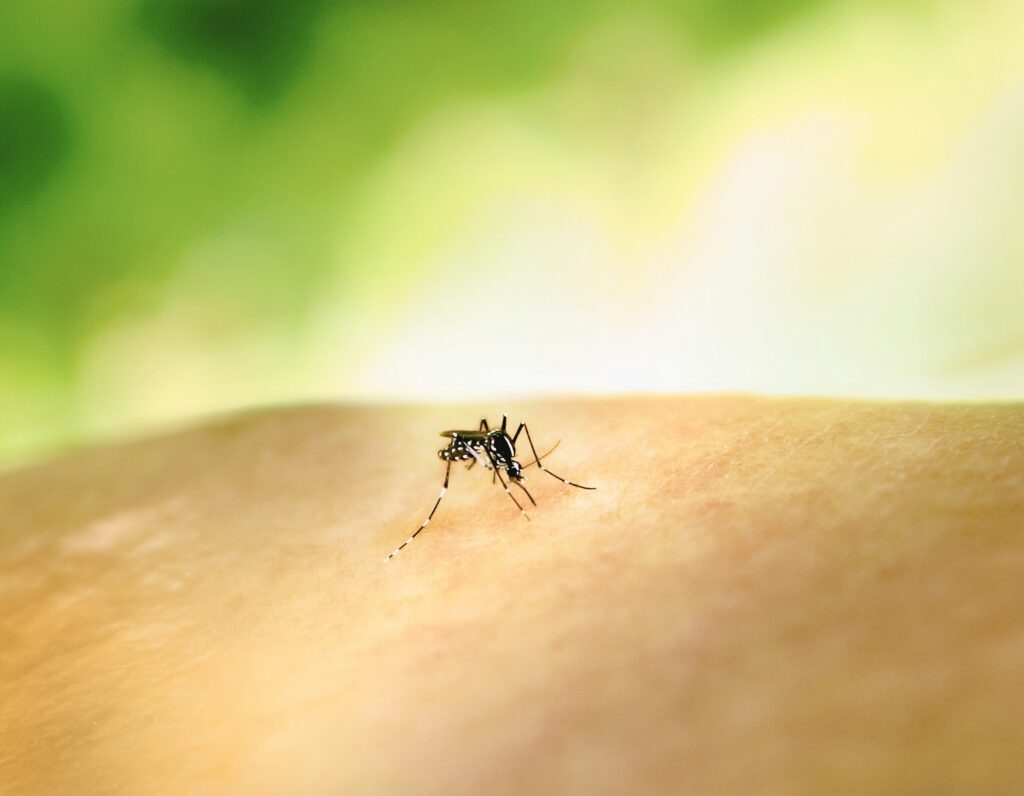
A mosquito is one of the smallest animals capable of creating an enormous public-health problem.
It can pass almost unnoticed through our homes, schools, offices, hotels, hospitals and communities. Yet the diseases transmitted by mosquitoes continue to place an extraordinary burden on Africa.
This is why World Mosquito Day should not simply be another date on the public-health calendar.
It should be a reminder that mosquito control is not only a pest-control problem. It is a sanitation problem, a drainage problem, a waste-management problem, an education problem, an urban-planning problem, a technology problem and ultimately a community problem.
And increasingly, it is also a problem of insecticide resistance.
The question we should be asking is no longer:
“What chemical can we spray to kill mosquitoes?”
The better question is:
“Why are mosquitoes thriving here in the first place, and what combination of interventions can sustainably reduce their population and the diseases they transmit?”
Africa cannot afford to treat mosquitoes as just a nuisance
The scale of the problem is enormous.
According to the WHO World Malaria Report 2025, there were an estimated 282 million malaria cases and 610,000 malaria deaths globally in 2024. The WHO African Region accounted for approximately 265 million cases, 95% of the global total and 579,000 deaths, also about 95% of the global total. Children under five accounted for approximately three-quarters of malaria deaths in the African Region.
Nigeria illustrates the scale particularly clearly.
WHO’s 2025 Nigeria country profile estimates 68.5 million malaria cases and approximately 184,900 malaria deaths in 2024, although the number of reported/confirmed cases is considerably lower because surveillance does not capture every infection.
These are not simply statistics.
Behind every number is a household, a child missing school, a parent missing work, a family spending money on healthcare, or a community dealing with the consequences of a preventable disease.
And malaria is only part of the mosquito story.
Different mosquito species can transmit diseases including dengue, yellow fever, chikungunya and Zika. Dengue alone is estimated by WHO to cause 100–400 million infections every year, with roughly half of the world’s population now at risk.
Africa therefore needs to think beyond a single mosquito species, a single disease and a single control method.
The insecticide-resistance problem is real, but let’s get the science right
One of the most important developments in modern mosquito control is the growing recognition of insecticide resistance.
But there is a dangerous misunderstanding circulating online:
“Mosquitoes are now immune to insecticides.”
That is not an accurate way to describe the science.
Resistance does not mean that every insecticide has stopped working against every mosquito.
Instead, mosquito populations can develop genetic and biochemical mechanisms that reduce their susceptibility to particular insecticides or insecticide classes.
WHO describes widespread and increasing insecticide resistance as a threat to effective malaria vector control. If resistance is not properly monitored and managed, it can undermine important gains made against malaria.
This distinction matters enormously.
A mosquito population may show resistance to one insecticide while remaining susceptible to another. Resistance can also vary by species, geography, insecticide class, intensity of exposure and resistance mechanism.
Recent African research demonstrates why local surveillance matters. A 2025 study assessing insecticide susceptibility among major African malaria vectors found that susceptibility can vary considerably across insecticides and mosquito populations, using WHO’s thresholds in which mortality of 98–100% indicates susceptibility, 90–98% indicates suspected resistance, and below 90% indicates resistance.
In other words: There is no scientifically responsible basis for saying that “no insecticide can kill mosquitoes.”
But there is very strong evidence that blindly relying on the same insecticide strategy forever is increasingly risky.
Resistance is changing how mosquito control must be approached
The response to insecticide resistance is not to panic.
It is to become smarter. For malaria control, this has already led to innovations such as next-generation insecticide-treated nets.
WHO recommends newer dual-active-ingredient nets in settings where pyrethroid resistance is a concern. Pyrethroid-chlorfenapyr nets, for example, combine different modes of action, while pyrethroid-pyriproxyfen nets combine a pyrethroid with an insect growth regulator.
WHO reports that clinical trials and pilot studies of some dual-insecticide nets have demonstrated improved malaria-control outcomes compared with standard pyrethroid-only nets.
This is an important lesson for the wider pest-management industry:
The future of mosquito control will not be built around “more chemical.”
It will be built around: better surveillance + better diagnosis + better environmental management + better technology + better education + targeted interventions.
The mosquito problem often begins before the mosquito exists.
When we talk about mosquito control, the conversation often starts with the adult mosquito: the mosquito flying around the house, biting people, disturbing sleep, or making an outdoor gathering uncomfortable. We then think about spraying, fogging, repellents or other methods of killing the mosquitoes we can see.
But what if we started earlier?
Imagine a neighbourhood with blocked drains, discarded plastic containers, abandoned tyres, uncovered water tanks, construction debris, poorly managed refuse, open gutters, potholes holding rainwater, overgrown vegetation and containers around homes collecting rainfall.
Now imagine spraying that neighbourhood every week.
You may kill many adult mosquitoes, but if the breeding environment remains unchanged, the next generation is already being produced.
This is why mosquito control must move from an adult-mosquito mindset to a breeding-cycle mindset.
The question should not only be, “How do we kill the mosquitoes?” It should also be, “What conditions are allowing mosquitoes to reproduce here?”
If we continuously create mosquito breeding sites, we continuously create mosquitoes.
This is where sanitation enters the conversation.
Mosquito control is often treated as a separate issue from environmental sanitation, but the two are closely connected. The way we manage waste, water, drainage and our surroundings can directly influence the availability of mosquito breeding habitats.
Consider something as ordinary as a discarded plastic cup. By itself, it is simply waste. After rainfall, however, it can become a small water-holding container. That container can become a breeding site. The same can happen with old tyres, cans, bottles, buckets, broken appliances, plastic packaging, construction materials and other discarded objects.
This means waste management is not merely about keeping a city clean or making a neighbourhood look attractive. It can also form part of vector control.
A community that improves waste collection, removes water-holding waste and maintains its drainage systems is simultaneously addressing part of its mosquito problem.
That is why mosquito control should not be the responsibility of pest-control professionals alone. Environmental-health officers, waste managers, urban planners, landlords, schools, businesses, construction companies, policymakers and communities all have a role to play.
Drainage Is Not Just Infrastructure. It Is Prevention.
Africa’s rapidly growing cities face another important challenge: water.
Rainwater needs somewhere to go. When drainage systems are poorly designed, blocked, damaged or inadequately maintained, water accumulates. And mosquitoes do not need a swimming pool.
Some mosquito species can exploit remarkably small amounts of standing water.
A mosquito-control programme that ignores drainage is therefore incomplete.
The objective should not simply be to remove mosquitoes from a property. It should also be to remove the environmental conditions that allow mosquitoes to repeatedly reproduce on that property.
This means paying attention to gutters, storm drains, open drains, construction sites, water-storage areas, roof drainage, landscaping features, discarded containers, unused equipment and other places where water can accumulate.
In many African communities, especially rapidly urbanising areas, drainage maintenance should therefore be viewed as a public-health intervention and not simply an infrastructure concern.
A blocked gutter may appear to be a minor maintenance problem today. After rainfall, it can become part of a much larger problem. This is why prevention must begin before mosquito populations become visible.
Sometimes, the most powerful mosquito-control technology may be a broom, a covered container and a functioning drain.
That may sound simplistic, but it is not.
Technology is valuable, but technology cannot compensate indefinitely for poor environmental management. A sophisticated insecticide programme can be undermined by a neighbourhood filled with unmanaged breeding sites.
Conversely, environmental management can significantly reduce the number of places where mosquitoes can reproduce.
This is the philosophy behind Integrated Vector Management.
Modern mosquito control should not depend on a single intervention. It should combine environmental management, source reduction, surveillance, appropriate larval and adult mosquito interventions, personal protection, insecticide-resistance monitoring, community education and data-driven decision-making.
The key word is integrated.
From “Spray and Leave” to Surveillance-Driven Mosquito Control
Modern mosquito control is increasingly becoming a data problem. Instead of treating every location in exactly the same way, professionals should be asking important questions.
What mosquito species is present? Where are the breeding sites? Which breeding sites are most productive? What environmental conditions are sustaining the population? What insecticide has been used previously? Is resistance suspected or confirmed? Which intervention is appropriate for the species and environment? And perhaps most importantly, did the intervention actually work?
This represents an important shift in professional pest management.
The future pest professional should not only be able to spray.
The professional of the future must be able to observe, diagnose, analyse, document, communicate and evaluate.
This is particularly important as mosquito-control challenges become more complicated.
A professional who understands mosquito biology, environmental conditions, resistance, surveillance and treatment evaluation can make better decisions than one who simply repeats the same treatment whenever mosquitoes are reported.
The industry must move from treating symptoms to understanding causes.
New Technologies Are Changing What Mosquito Control Can Look Like
The science of mosquito control is moving beyond conventional spraying. Next-generation insecticide-treated nets are being developed and deployed to improve protection in areas where resistance to conventional insecticides is affecting mosquito-control programmes.
Larval source management offers another important approach. Rather than waiting for adult mosquitoes to emerge, appropriate interventions can target the aquatic stages of the mosquito life cycle eggs, larvae and pupae, where breeding habitats are identifiable and manageable.
This is particularly relevant in urban and peri-urban environments where breeding sites can sometimes be mapped and targeted. There are also emerging biological approaches.
Wolbachia-based mosquito-control programmes, for example, involve mosquitoes carrying the naturally occurring bacterium Wolbachia, which can reduce the ability of certain mosquitoes to transmit viruses such as dengue. Such programmes have been implemented and evaluated in several countries, although their application is particularly relevant to certain Aedes-borne diseases and should not be treated as a universal replacement for malaria-vector control.
Researchers are also investigating sterile-male technologies and genetic approaches that could suppress mosquito populations or alter their ability to transmit disease.
These technologies remain highly regulated and, in many cases, are still being researched and evaluated. They should therefore not be presented as commercially available universal solutions.
But they demonstrate something important.
Mosquito control is becoming more sophisticated and Africa must be part of that conversation.
Artificial intelligence and digital technologies may also play an increasingly important role.
AI can potentially support mosquito species identification, surveillance-data analysis, mapping of breeding hotspots, prediction of mosquito population dynamics, analysis of environmental and weather conditions, intervention planning and public-health communication.
AI is not replacing entomologists or pest-management professionals. It can make them more capable.
The same principle applies to the wider digital transformation of pest management.
Mobile inspection systems, GIS mapping, digital reporting, environmental monitoring, data dashboards and automated alerts can help professionals move from guesswork to evidence-based decisions.
But There Is Another Technology Africa Must Not Underestimate: The Internet
There is an extraordinary opportunity sitting in almost everyone’s pocket.
A smartphone.
Africa’s mosquito-control challenge is not only a scientific challenge. It is also a communication challenge.
We now live in a world where a 30-second video can reach thousands or even millions of people faster than a traditional awareness campaign could reach one neighbourhood.
TikTok, Instagram, Facebook, YouTube, WhatsApp, LinkedIn, podcasts, blogs and other digital platforms have transformed how people discover and consume information.
The question is no longer simply, “How do we educate people?”
The question is:
How do we make accurate education interesting enough that people actually want to consume and share it?
This is where PestInsight sees an enormous opportunity.
Mosquito education should not remain trapped inside technical reports, conference rooms and academic publications.
Scientific knowledge must be translated into language people understand and content they actually want to engage with.
Imagine a mosquito-awareness campaign where a community does not simply see a message saying, “Spray your house to kill mosquitoes.”
Instead, they see a short video showing five places where mosquitoes could be breeding around their home.
Another video explains why a blocked gutter can become a mosquito breeding site.
Another explains what insecticide resistance actually means.
Another demonstrates how to inspect a compound for potential breeding sites.
Another shows what happens to mosquito larvae after rainfall.
Another explains why spraying every week may not necessarily solve the underlying problem.
This is how awareness becomes engagement.
And engagement can become behaviour change.
The AI Era Creates Both a Problem and an Opportunity
Generative AI has dramatically lowered the cost of producing content. Today, almost anyone can generate articles, images, videos, voiceovers, animations, presentations and educational materials.
But more content does not automatically mean more knowledge.
The internet is becoming saturated with content that looks professional but may be scientifically inaccurate.
This makes trusted expertise more important, not less important.
In the AI era, PestInsight and the wider pest-management community have an opportunity to become trusted sources of verified, practical and understandable pest knowledge.
We should not compete with AI by producing more noise. We should use technology to produce better knowledge.
This means fact-checking information, referencing credible research, explaining complex scientific concepts in simple language and making reliable pest-management knowledge accessible to communities.
The opportunity is enormous.
A pest-management professional can now record a one-minute video explaining mosquito breeding and potentially reach more people in one day than a traditional awareness campaign might reach in weeks.
A school can use an animation to teach children about the mosquito life cycle.
A facility manager can receive a digital inspection report showing exactly where breeding conditions were identified.
A community can use WhatsApp to report stagnant-water hotspots.
A pest professional can use digital tools to document treatment outcomes and monitor recurring problems.
Technology becomes valuable when it improves understanding and action.
We Need to Make Mosquito Education Visual
The mosquito life cycle is visual.
The breeding environment is visual.
The consequences are visual.
The solution is visual.
That gives us an extraordinary opportunity to transform technical pest-management knowledge into compelling public education.
Instead of telling people, “Eliminate breeding sites,” show them.
Instead of saying, “Poor sanitation contributes to mosquito breeding,” show the discarded tyre filled with rainwater.
Instead of saying, “Maintain drainage,” show the blocked gutter and what happens after rainfall.
Instead of explaining insecticide resistance using complicated scientific terminology, demonstrate the concept.
Some mosquitoes die. Some survive. Those survivors may carry resistance mechanisms that contribute to a population that becomes harder to control with that particular insecticide.
Education becomes easier when people can see the cause-and-effect relationship.
Cause and Effect Should Become the Centre of Mosquito Awareness
One of the biggest weaknesses of public-health communication is that we often tell people what to do without explaining why.
People are more likely to change behaviour when they understand the chain of events.
Poor waste disposal can lead to containers accumulating.
Rainwater collects in those containers.
Mosquitoes lay eggs.
Larvae develop.
Adult mosquitoes emerge.
Human-mosquito contact increases.
The risk of disease transmission can increase.
That is a story.
And stories are memorable.
This is why pest education should not simply be a list of instructions. It should explain cause and effect.
If we want people to stop dumping waste, we should explain how that waste can create breeding habitats.
If we want people to maintain their gutters, we should explain what happens when those gutters become blocked.
If we want people to take insecticide resistance seriously, we should explain what resistance actually means.
If we want communities to participate in mosquito control, we should show them how their individual actions can influence the wider environment.
Awareness becomes more powerful when people understand their role in the system.
What Should Modern Mosquito Control Look Like in Africa?
Africa does not need a single miracle intervention.
It needs a layered defence system.
We need better environments through improved sanitation, drainage, waste collection, water storage, housing, construction-site management and environmental maintenance.
We need better surveillance so that we know which mosquitoes are present, where they breed, when they are active, how populations are changing and whether insecticide resistance is present.
We need better public education so that communities understand how mosquitoes breed, how to identify breeding sites, how to reduce exposure and when professional intervention may be necessary.
We need better professional control, with interventions selected and properly applied according to mosquito biology and environmental conditions.
We need better resistance management so that we do not repeatedly rely on the same chemical approach without understanding susceptibility and resistance patterns.
We need technology, including GIS, mobile reporting, digital inspection systems, data analytics, remote sensing and AI-assisted analysis.
And we need community participation.
A mosquito does not respect property boundaries.
A neglected compound can affect its neighbours.
A blocked drainage channel can affect an entire street.
A community therefore cannot completely solve a mosquito problem household by household.
Mosquito control requires collective responsibility.
The Pest-Control Industry Must Evolve Too
There is an important lesson here for pest-management professionals.
The traditional image of pest control is often simple:
Technician + equipment + chemical = solution.
The future is more sophisticated.
It is: Technician + science + surveillance + environmental management + data + communication + appropriate intervention = sustainable control.
Professionals need stronger knowledge of entomology.
They need to understand resistance.
They need to understand environmental conditions.
They need to document their work.
They need to evaluate outcomes.
They need to educate clients.
And they need to communicate science in language that ordinary people understand.
A pest-control company that only knows how to spray will increasingly compete with companies that know how to solve problems.
The value of the pest professional should not be measured only by how much chemical they can apply.
It should be measured by how effectively they can identify the cause of a problem, determine the appropriate intervention, implement it responsibly and evaluate whether the problem has actually been addressed.
A New Generation of Pest Professionals Must Also Become Educators
This is particularly important in Africa.
We cannot build a strong pest-management industry without investing in education.
That means educating technicians, apprentices, students, property managers, facility managers, environmental-health professionals, business owners, homeowners, teachers, children and policymakers.
Education should not end when someone completes a course.
Pest management is changing.
Mosquito biology is changing.
Resistance patterns are changing.
Technology is changing.
Climate and urban environments are changing.
Therefore, continuous professional development is not optional.
It is part of responsible pest management.
We need professionals who are willing to learn beyond the chemical label.
We need professionals who understand why a treatment works.
We need professionals who understand when a treatment may not be enough.
And we need professionals who can communicate what they know to the communities they serve.
The Future Is Not “Chemical Versus No Chemical”
The debate around chemical control is often too simplistic. Chemical control remains an important tool in mosquito management. The issue is how, when, where and why it is used.
Responsible mosquito control should consider the target species, the life stage being targeted, the environment, human exposure, non-target organisms, resistance, application method, product label and regulatory requirements, monitoring and follow-up evaluation.
The objective should be effective control with responsible use, not indiscriminate chemical application.
The answer to insecticide resistance is not necessarily to abandon insecticides.
The answer is to understand resistance, monitor it and make better decisions.
The same principle applies to every other mosquito-control tool.
No single intervention should be treated as a magic solution.
Perhaps the biggest change we need is cultural.
Too often, mosquito control begins after the problem becomes obvious.
People wait until mosquitoes are everywhere.
They wait until someone becomes sick.
They wait until a hotel receives complaints.
They wait until an event centre becomes uncomfortable.
They wait until an office has a mosquito problem.
Then they call for emergency treatment.
But mosquitoes do not suddenly appear.
The population develops over time.
Breeding sites accumulate.
Eggs hatch.
Larvae develop.
Adults emerge.
The population increases.
Prevention gives us an opportunity to intervene earlier.
That is why the message should be simple:
Stay proactive, not reactive, break the breeding cycle before mosquitoes become a problem.
Mosquito control does not always begin with calling a pest-control company.
It can begin with an inspection.
Walk around your home, workplace or facility.
Look for stagnant water, blocked gutters, open drains, discarded containers, old tyres, uncovered tanks, buckets, flowerpots, construction materials, poorly maintained landscaping and other objects capable of collecting water.
Empty, remove, cover, clean or properly manage anything capable of becoming a breeding site.
Where a mosquito problem persists, professional assessment can help determine the appropriate intervention rather than simply repeating an unverified treatment.
World Mosquito Day Should Be More Than a Hashtag
On August 20, it is easy to post a mosquito graphic.
But awareness should produce something more.
It should make someone inspect their compound.
It should make a landlord repair a drainage problem.
It should make a business owner improve environmental sanitation.
It should make a school teach children about mosquito breeding.
It should encourage a facility manager to document mosquito activity.
It should encourage pest professionals to learn more about resistance.
It should encourage governments and communities to treat drainage and waste management as part of public health.
And it should encourage the next generation to see pest management not simply as “fumigation,” but as a science-driven profession connected to public health, environmental management and technology.
Africa Has the Knowledge. Now We Need to Connect It.
The mosquito problem will not be solved by one company.
It will not be solved by one chemical.
It will not be solved by one government programme.
It will not be solved by one social-media campaign.
It will require science, policy, infrastructure, communities, technology, education and professional pest management working together.
The encouraging news is that we are not starting from zero.
Mosquito-control interventions have already contributed significantly to reducing malaria transmission and preventing disease and deaths. The challenge now is to preserve those gains while adapting to insecticide resistance, changing mosquito populations, urbanisation, climate pressures and operational constraints.
The future should not be about abandoning insecticides.
It should be about using them more intelligently.
It should not be about abandoning technology.
It should be about using technology to improve decisions.
It should not be about replacing human expertise with AI.
It should be about using AI to amplify credible human expertise.
And it should not be about treating mosquitoes only after they become a nuisance.
It should be about breaking the breeding cycle before the problem escalates.
This World Mosquito Day, don’t simply ask:
“How do we kill mosquitoes?”
Ask a better question:
“What is creating the mosquitoes?”
Look at the entire system: waste, water, drainage, sanitation, housing, climate, human behaviour, mosquito biology, insecticide resistance, surveillance, technology and education.
Because the future of mosquito control is not one solution.
It is an ecosystem of solutions.
And in Africa, where the burden remains disproportionately high, we cannot afford to be reactive.
Stay proactive. Break the breeding cycle. Protect communities.
About the Author
Shofu Babalola is a pest-management professional, entrepreneur and the Founder of PestInsight Global Initiative, an initiative focused on advancing pest-control knowledge, professional development and public awareness. Through PestInsight, he advocates for stronger pest-control education, practical industry knowledge and the responsible use of science, technology and innovation to improve pest management across Africa.
PestInsight Initiative
Empowering Communities Through Pest Control Education