
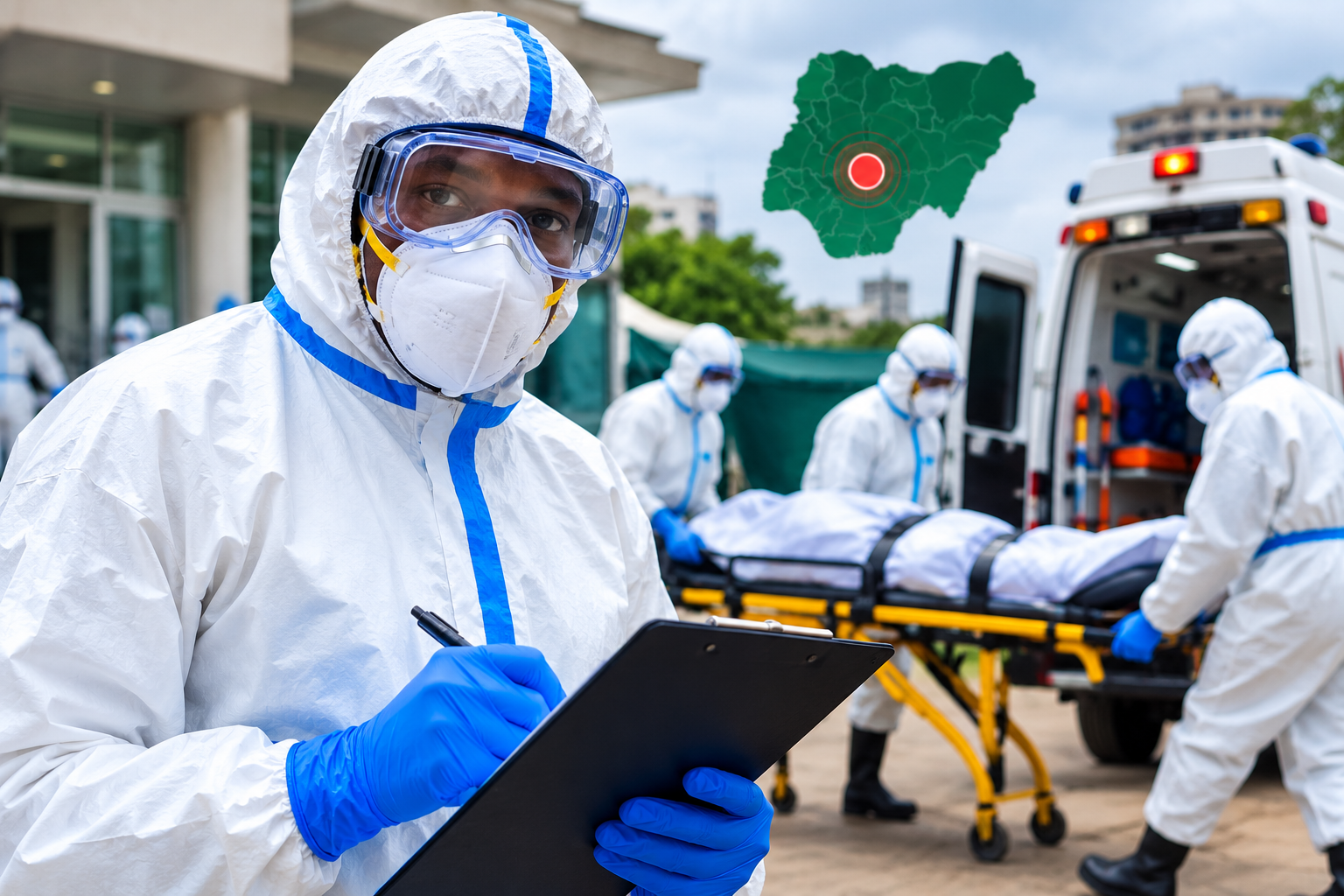
Nigeria has confirmed an imported case of Ebola Bundibugyo virus disease in the Federal Capital Territory (FCT), Abuja, prompting an intensified public health response as authorities work to prevent further transmission.
The Federal Government announced the confirmation on 20 October 2026 following laboratory testing. The patient, a woman with a recent international travel history involving Uganda, is in isolation and receiving medical care. At the time of the announcement, authorities had identified 44 contacts for monitoring.
The development places Nigeria among the countries affected by the ongoing regional outbreak, which began in the Democratic Republic of the Congo (DRC) in May 2026. Health officials are prioritising contact tracing, surveillance, early detection and infection prevention to contain the infection.
According to the Federal Ministry of Health and Social Welfare and the World Health Organization (WHO), the patient developed symptoms on 7 October and sought care at a private health facility in Abuja on 11 October. Laboratory testing confirmed the infection on 20 October.
Public health teams have begun tracing people who may have been exposed, including healthcare workers, patients, caregivers and travel contacts. Authorities are also strengthening infection prevention and control measures at the healthcare facility where the patient received care.
Although the patient’s travel history includes Uganda, the precise location where she contracted the virus has not been established. Investigations are continuing to reconstruct her travel and exposure history.
The 44 identified contacts are not 44 confirmed Ebola cases. They are individuals being assessed or monitored because they may have been exposed to the infection.
Which type of Ebola virus is involved?
The infection has been identified as Bundibugyo virus disease, a form of Ebola disease caused by Bundibugyo virus.
Ebola disease is a severe illness that can spread through direct contact with the body fluids of an infected person or contaminated materials. The Bundibugyo virus is distinct from the Ebola virus responsible for several previous major outbreaks, and vaccines or treatments developed for other Ebola virus types cannot automatically be assumed to work against it.
The distinction is important because prevention and treatment guidance must reflect the specific virus involved. WHO reports that there is currently no approved vaccine or specific treatment for Bundibugyo virus disease, although early supportive medical care remains essential.
The Federal Ministry of Health and Social Welfare, the Nigeria Centre for Disease Control and Prevention (NCDC), FCT health authorities and international partners are coordinating the response.
Key measures include:
- Contact tracing: Identifying and monitoring people who may have been exposed to the confirmed case.
- Enhanced surveillance: Encouraging healthcare facilities to recognise possible symptoms and assess relevant travel or exposure histories.
- Isolation and clinical care: Ensuring that suspected and confirmed cases receive appropriate care under infection prevention measures.
- Hospital infection control: Strengthening protective procedures to reduce the risk of transmission to patients, healthcare workers and caregivers.
- Public communication: Providing verified information and encouraging people to report concerns promptly.
The Federal Government has also urged public and private healthcare facilities nationwide to maintain heightened vigilance, promptly report suspected cases and follow appropriate infection prevention and control procedures.
Read more: What You Need to Know About Ebola: Signs and Symptoms, Transmission, Treatment and Prevention
What symptoms should Nigerians watch out for?
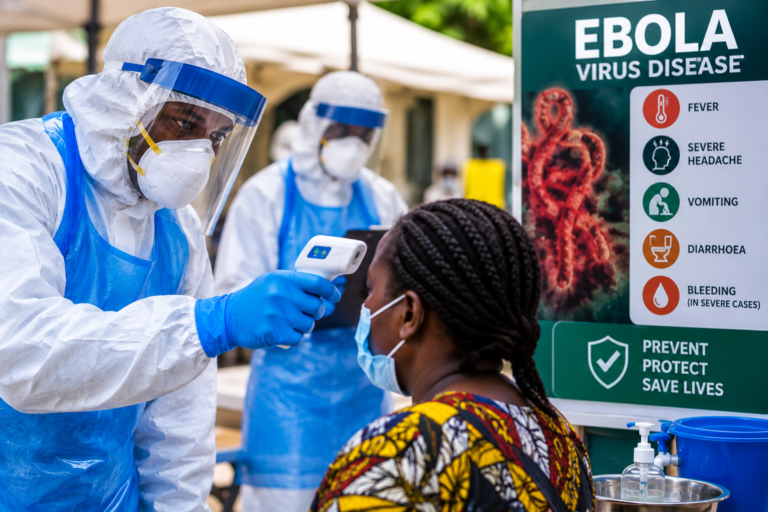
Early Ebola symptoms can resemble malaria, typhoid fever and other common infections. Symptoms may include:
- Sudden fever
- Severe headache
- Unusual weakness or fatigue
- Muscle and joint pain
- Sore throat
- Vomiting and diarrhoea
- Abdominal pain
- Skin rash in some cases
- Bleeding in some severe cases
The incubation period is generally 2–21 days. Not every patient develops bleeding, and people should not wait for bleeding before seeking medical assessment.
Having a fever does not mean someone has Ebola. However, anyone who develops compatible symptoms after a credible exposure should contact public health authorities or a designated health service promptly. Call ahead before attending a healthcare facility and follow instructions on how to access care safely.
How can the public help prevent further transmission?
Ebola prevention depends on reducing exposure to infectious body fluids and following public health guidance.
Members of the public should:
- Avoid direct contact with the blood and other body fluids of anyone suspected or confirmed to have Ebola.
- Wash their hands regularly with soap and running water.
- Avoid handling sick or dead wildlife.
- Never touch or prepare the body of someone who may have died from Ebola; contact trained public health personnel.
- Cooperate with contact-tracing teams and follow monitoring instructions.
- Avoid sharing unverified claims, patients’ identities or private medical information on social media.
Routine fumigation and insecticide spraying do not prevent Ebola transmission. The established prevention measures focus on exposure reduction, hygiene, infection control, surveillance and safe clinical care.
Lessons from Nigeria’s 2014 Ebola response
Nigeria’s experience containing the 2014 Ebola outbreak demonstrated the importance of rapid case identification, contact tracing, coordination between health agencies and cooperation from affected communities.
That experience provides a foundation for the current response, but it does not remove the need for vigilance. Early reporting, accurate information and prompt implementation of public health measures remain essential to preventing further transmission.
Businesses, schools, hospitals and other institutions should follow official guidance and maintain appropriate hygiene and illness-reporting procedures. Healthcare facilities require additional infection prevention measures when evaluating suspected cases.




[…] is a serious infectious disease that can cause severe illness and death. Following the reported confirmation of a case of Bundibugyo virus disease in Abuja on 20 October 202…understanding the disease has become particularly important for Nigerians, healthcare workers, […]